

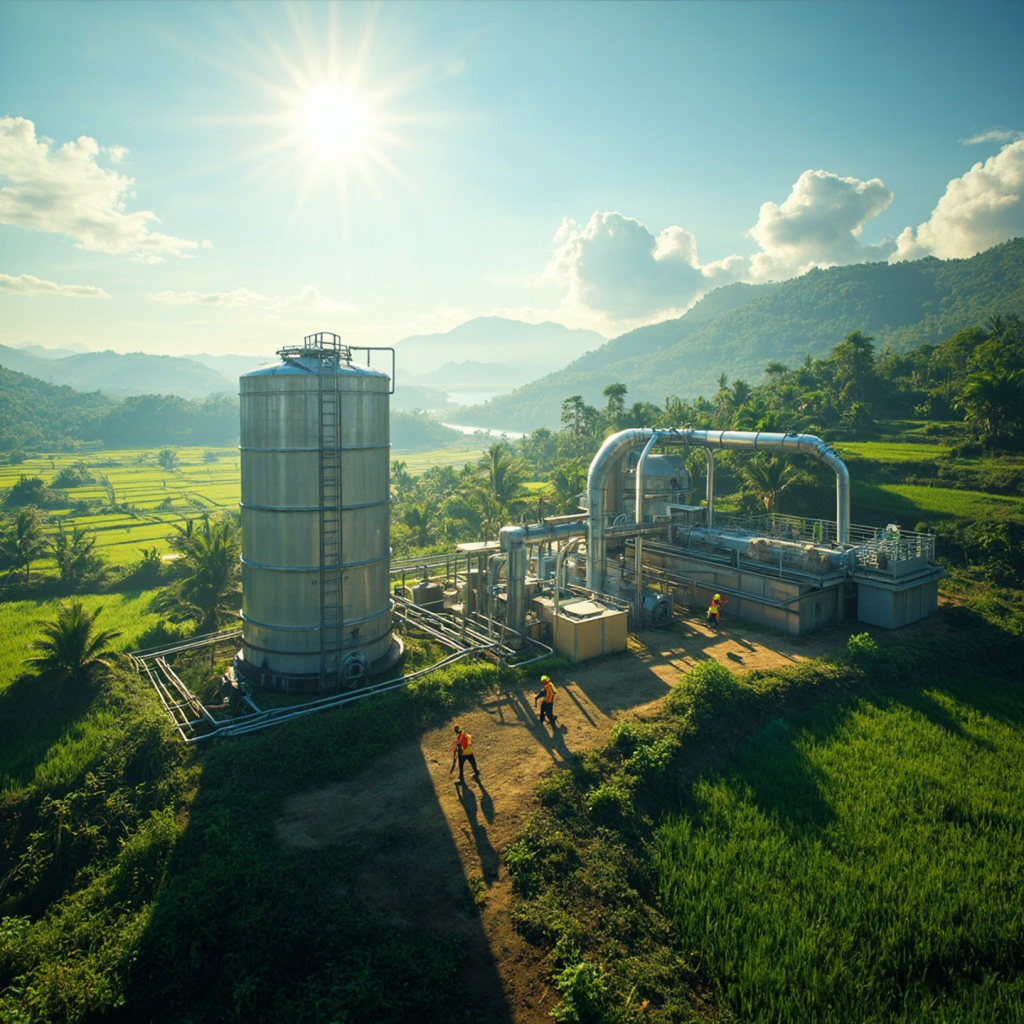
The Biotech Waste-to-Energy Solution represents a transformative opportunity in Indonesia’s renewable energy landscape. Leveraging Refuse Derived Fuel (RDF) technology, this project aims to convert municipal and industrial waste into valuable energy sources — addressing the country’s growing waste management challenges while contributing to national clean energy goals.
Positioned at the intersection of biotechnology, waste processing, and renewable energy, this initiative supports Indonesia’s long-term sustainability objectives and offers investors early entry into a scalable and high-impact sector.
Location & Scope
The project is currently assessing multiple potential sites across Indonesia, prioritizing areas with high waste generation and proximity to industrial energy users. These strategic locations will ensure a consistent feedstock supply while minimizing logistical costs and maximizing operational efficiency.
Investment Overview
- Technology Type: Biotech – Refuse Derived Fuel (RDF)
- Feedstock Potential: 10 million tonnes per year
- Concession Status: To be secured
- Investment Stage: Early stage / Pre-development
Investment Highlights
- Vast feedstock availability: Access to approximately 10 million tonnes of waste annually, ensuring a sustainable input stream.
- Proven RDF technology: Utilizes biotech-based conversion processes already validated in international markets.
- National relevance: Tackles Indonesia’s pressing waste management issue while advancing its renewable energy targets.
- Dual revenue model: Generates income through both waste management services and energy production sales.
- Scalable potential: Multiple site development opportunities across key regions with industrial and municipal partnerships.
Market Opportunity
Indonesia produces over 65 million tonnes of waste annually, much of which remains underutilized. RDF technology transforms this waste into a clean, energy-dense fuel that can power cement plants, manufacturing facilities, and energy producers — creating a sustainable circular economy model.
This sector aligns strongly with Environmental, Social, and Governance (ESG) principles and offers measurable impact in carbon reduction, waste diversion, and green energy adoption. As global and domestic investors increasingly prioritize ESG-aligned assets, RDF-based projects are emerging as a viable and profitable renewable energy frontier.
Strategic Outlook
By combining biotechnology innovation with infrastructure investment, the project aims to establish Indonesia as a regional leader in waste-to-energy transformation. Long-term plans include building scalable RDF facilities capable of serving both domestic and export energy markets, supported by government initiatives promoting renewable energy and waste reduction.